

Growing Outward
Transforming Our King’s Block Yard into a Sustainable Gathering Garden
After renovating our 1816 King’s Block building in Fair Haven to Phius Passive House standards, we turned our attention outdoors, transforming our yard into a lower-maintenance, more sustainable garden for lunch breaks, meetings, and gatherings.
Extending Our Sustainability Goals Beyond the Envelope
Inside King’s Block, our renovation delivered a tight envelope, efficient mechanical systems, and a rooftop solar array that produces 90% of the energy we use. (Read more in our previous articles.) Outside, we applied the same thinking: a landscape that asks for less water, less mowing, and less upkeep, while giving more back to the local ecosystem and the people who use it.
Our design goals:
- Gathering: A comfortable outdoor room for lunch and other gatherings
- Native plantings: Grasses and trees suited to coastal Connecticut
- Low maintenance: Minimal mowing, watering, and fertilizing
- Water stewardship: Rainwater captured and used on site
A Patio for Lunchtime and Gatherings
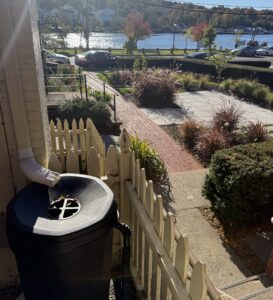
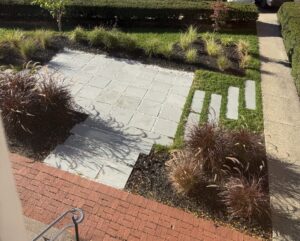
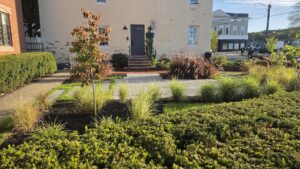
At the heart of the garden is a patio of large-format stone pavers set in a grid with crushed stone joints. The open joints let rainwater soak into the ground, and the clean geometry offers a calm, modern counterpoint to the building’s historic brick. Light bistro tables and chairs adapt easily to a team lunch or a neighborhood gathering, all with a view across the Quinnipiac River.
Paths That Reflect Our Walks Through the Area
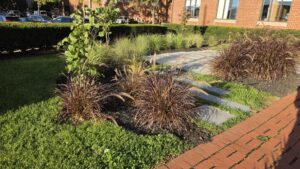
Long, linear stepping stones trace the routes we walk through the site each day, connecting the existing brick walk to the patio in staggered bands. They feel less like a formal walkway and more like an invitation to wander.
Micro-Clover: A Lawn That Rests
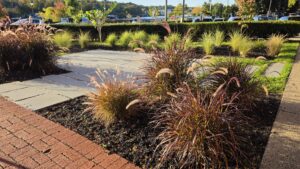
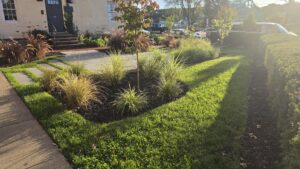
In place of conventional turf, we planted micro-clover. It stays low and green, needs mowing only about twice a year, draws nitrogen from the air so it thrives without fertilizer, and holds up well through dry spells.
Native Grasses and Trees
Native grasses and young native trees fill the planting beds. Once established, they need little supplemental water and provide food and shelter for pollinators and birds. The existing clipped hedge frames the garden, and as the new trees mature, they will shade the patio on summer afternoons.
Rain Barrels: Our Roof Waters Our Garden
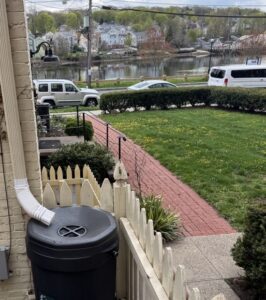
Rain barrels connected to our roof leaders now supply water for the garden. Just a stone’s throw from the Quinnipiac River, every gallon we capture is a gallon kept out of the storm drains. Together with the permeable patio joints and planted beds, the garden helps rain stay where it falls.
A Garden That Grows Season by Season
In seasons to come, we will add flowering plants for color, texture, and even more pollinator habitat. The garden is designed to evolve, and it has already become our favorite backdrop for lunch breaks, team conversations, and even our new team portrait. We will share new photos as it grows.
The Many Benefits of a Sustainable Landscape
A thoughtfully designed landscape extends the benefits of a high-performance building beyond its walls. Native plantings and low-mow ground covers reduce maintenance time and cost, captured rainwater conserves resources and eases pressure on stormwater systems, and a welcoming outdoor space supports the health and connection of everyone who spends time there.